The Six Elements of a Strong Personal Brand on LinkedIn
An evidence-based guide to building a personal brand that is clear, differentiated, credible, visible, and connected on LinkedIn.
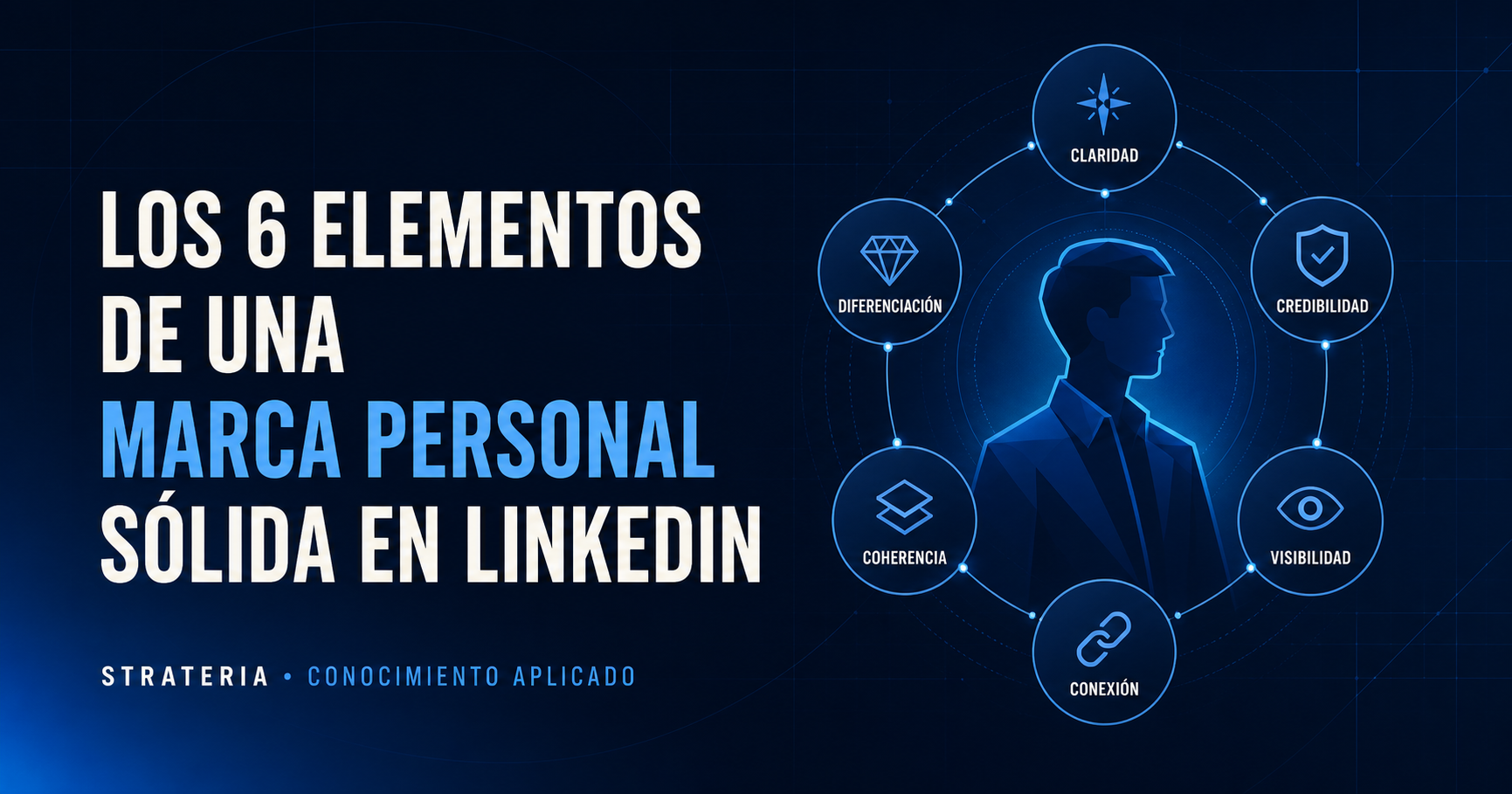
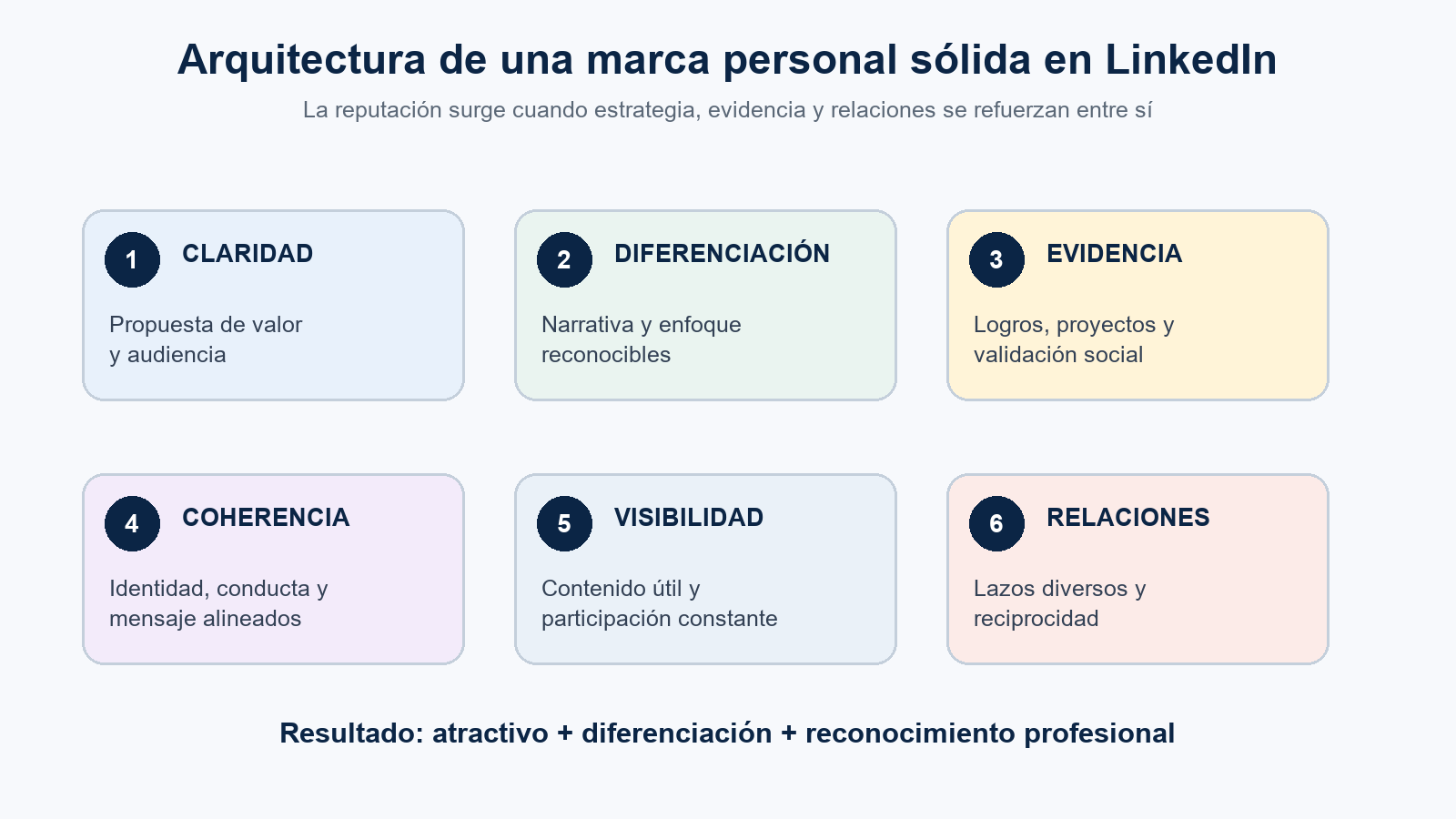
Figure 1. Integrated architecture of personal branding on LinkedIn.
Source: own elaboration based on Gorbatov et al. (2018, 2021), Labrecque et al. (2011), and Utz (2016).
Introduction: A brand is not declared, it is demonstrated
Think about what happens when you open a LinkedIn profile. In a few seconds, we get an idea: we understand what that person does, what they know how to do, and whether we would trust them to solve a problem. That impression—not the logo, the perfect photo, or a grand phrase—is the personal brand. Gorbatov, Khapova, and Lysova (2018) describe it as a deliberate process of creating, positioning, and maintaining a positive impression before a specific audience. Put more simply: the brand exists in the minds of others.
LinkedIn helps showcase expertise, gain recognition, and meet people, but it cannot fabricate a career. Labrecque, Markos, and Milne (2011) found that many professionals are unclear about how their audiences perceive them and struggle to maintain a coherent narrative during career changes. That is why a credible brand is built gradually: with a clear idea, evidence, a recognizable voice, and nurtured relationships.
1. Clarity: So that it is understood without needing to decipher the profile
The first test is very simple: after reading the headline and the About section, could someone explain what problem this person solves, for whom, and in what way? If the answer requires too many assumptions, clarity is lacking. Shepherd (2005) already warned that personal branding discourse can remain empty slogans when it lacks a real foundation. Words like “strategic,” “innovative,” or “results-oriented” say little if they are not connected to concrete work.
In practice, the headline, summary, experience, and posts should tell the same story, even if they do not repeat the same phrase. For example, “Sales Director” informs a title; “I help B2B companies streamline their sales process and improve conversion” allows one to imagine a contribution. Clarity also means letting go. A profile that tries to speak to everyone usually ends up resembling hundreds of other profiles.
2. Differentiation: Finding your own angle, not inventing a character
Differentiating yourself does not mean adopting an extravagant personality or arguing to get attention. The difference usually lies in a combination that is hard to copy: experience, way of thinking, values, and chosen problems. Gorbatov, Khapova, Oostrom, and Lysova (2021) studied seven samples, with 3,273 participants, and validated three dimensions of personal brand equity: attractiveness, differentiation, and recognition. Being likable helps, but the audience needs to remember why they would choose that person over another.
An example: “business consultant” is a broad category. In contrast, someone who explains how they combine strategy, data analysis, and change management to improve investment decisions already offers a recognizable angle. That difference should appear in the projects they showcase, the questions they raise, the words they use, and even the topics they choose not to comment on. If the distinctive trait only lives in one line of the profile, it will hardly become reputation.
3. Credibility: Fewer adjectives, more evidence
Here it is worth asking an uncomfortable question: what part of the profile could another person verify? Projects, results explained with context, work samples, publications, relevant certifications, and specific recommendations turn a promise into evidence. Chiang and Suen (2015) observed that the quality of self-presentation arguments on LinkedIn influenced perceptions of fit with the job and organization, and that perception affected hiring recommendations. It is not the same to claim “I know how to lead teams” as to tell which team was led, in what situation, and what changed.
Third-party voices reinforce credibility when they say something concrete. “Excellent professional” contributes less than a testimonial that describes the challenge, the action, and the outcome. Zide, Elman, and Shahani-Denning (2014), after comparing 288 profiles and interviewing recruiting professionals, found that presentation varies across occupations: the evidence useful for a designer is not the same as for a lawyer. Furthermore, Guillory and Hancock (2012) showed that the public nature of LinkedIn changes deception patterns compared to the private resume; it does not eliminate distortion but shifts where it appears. Honesty protects the brand in the long run.
Table 1. Elements of personal branding and their operational translation.
| Element | Mechanism | Application on LinkedIn | Main evidence |
|---|---|---|---|
| Clarity | Reduces ambiguity about audience, problem, and contribution | Headline, About, and experience aligned | Gorbatov et al., 2018; Shepherd, 2005 |
| Differentiation | Creates a non-interchangeable professional association | Professional thesis, focus, and thematic territories | Gorbatov et al., 2021 |
| Credibility | Turns promises into verifiable signals | Results, projects, samples, and recommendations | Chiang & Suen, 2015; Zide et al., 2014 |
| Coherence | Protects trust between message and behavior | Consistent narrative and explained evolution | Labrecque et al., 2011; van Dijck, 2013 |
| Visibility | Increases recognition within a field | Useful content, comments, and participation | Gorbatov et al., 2021 |
| Relationships | Carries information, references, and opportunities | Diverse ties, bridges, and reciprocity | Utz, 2016; Rajkumar et al., 2022 |
Source: own synthesis of the cited literature.
4. Coherence and authenticity: Maintaining a thread, not staying still
A profile, a post, and a private conversation do not have to sound identical, but they should belong to the same person. That is what we mean by coherence. Van Dijck (2013) explained that LinkedIn, through its fields and conventions, pushes us to organize professional life as a continuous narrative. That structure can be useful, though it also simplifies. The task is to use it to provide context without turning a career into an artificially perfect story.
Authenticity does not mean sharing every personal detail or posting emotions daily. It means that the public promise withstands contact with real work. Lair, Sullivan, and Cheney (2005) warned about the risk of treating the professional as a product forced to commercialize their entire identity. A human voice admits nuances, acknowledges the team, and avoids feigning certainty. It also allows change: explaining a transition usually generates more trust than hiding it.
5. Visibility with substance: Publishing to be useful and remembered
A valuable proposal that no one sees has few opportunities to become reputation. However, visibility does not equal posting every day. Content works best when it helps associate a name with certain problems and a particular way of addressing them. A well-told case, an honestly analyzed mistake, a decision framework, or a synthesis of evidence usually shows more competence than a succession of self-promotional messages. Each post needs, at least, a clear idea and a practical consequence for the reader.
Frequency matters less than the ability to sustain quality. Labrecque et al. (2011) remind us that digital identity is formed by many traces, including some we do not control. The comments we leave, the way we disagree, the responses to difficult questions, and the care with which we update the profile also build the brand. Repeating certain themes helps to be recognized; changing formats prevents the conversation from becoming monotonous. The reasonable goal is not to be everywhere, but to have contributions worth remembering.
6. Relational capital: Reputation needs a network through which to circulate
Personal branding does not grow in isolation. The idea that weak ties can carry novel information dates back to Granovetter (1973). Utz (2016) found that strong and weak ties on LinkedIn were related to informational benefits, although the study did not allow for causal claims. Later, Utz and Breuer (2019) analyzed a representative sample of 685 Dutch users. Networking outside the immediate circle and weak ties predicted access to useful information; posting more, by itself, did not explain it in the full model. The network is not a decorative number.
The most compelling evidence comes from Rajkumar et al. (2022). Over five years, their experiments involved more than 20 million members, two billion new connections, and 600,000 new jobs. The result was not “the more strangers, the better”: moderately weak ties facilitated opportunities, while extremely weak ties offered less return. The application is simple: building bridges between communities, introducing people, and conversing with genuine interest is worth more than collecting contacts.
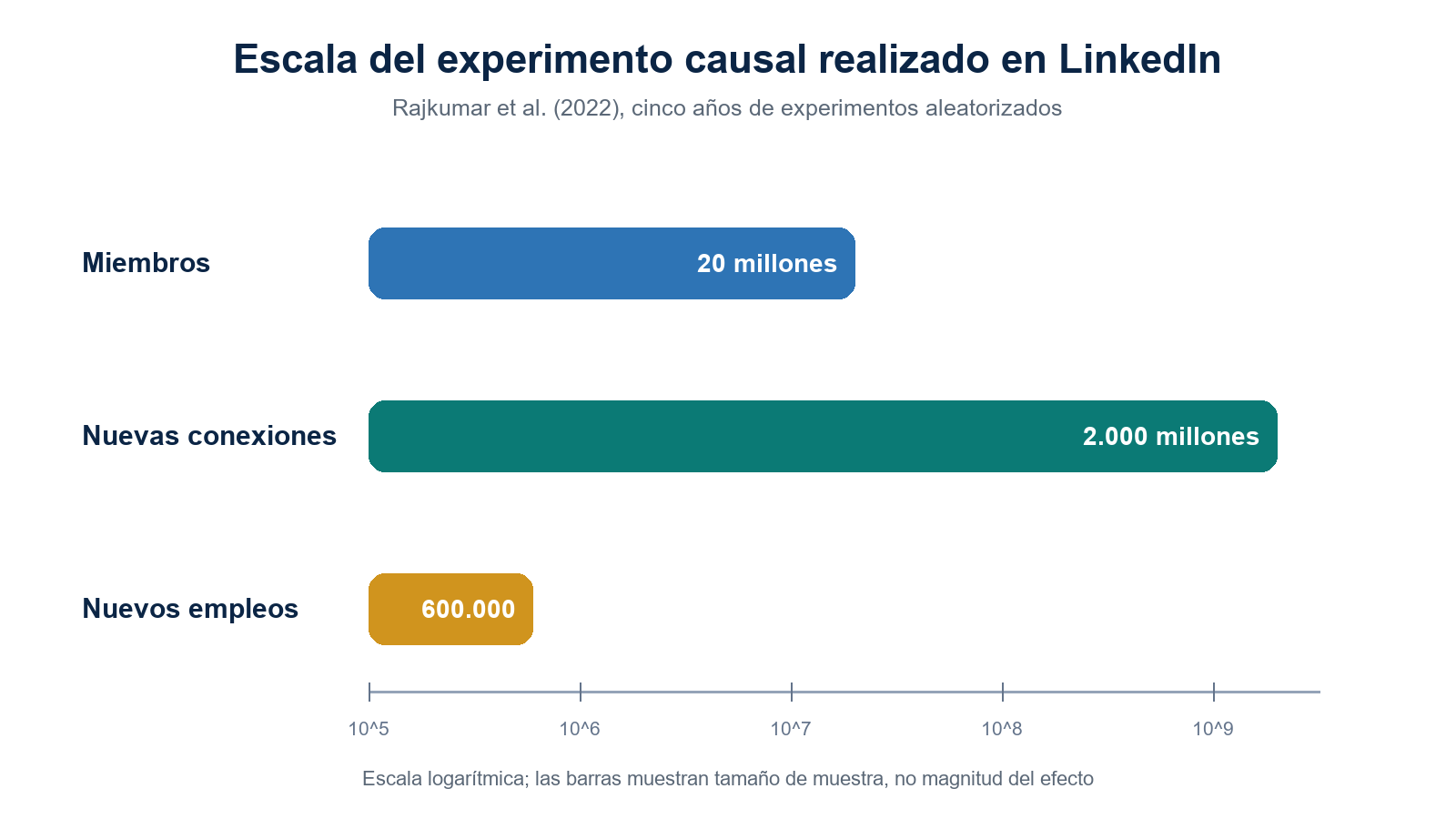
Figure 2. Scale of the causal study on the strength of weak ties.
Source: Rajkumar et al. (2022). The scale represents observed volumes, not effect sizes.
How to make the pieces work together
These six elements need each other. Clarity allows the promise to be understood; differentiation gives it its own contour; evidence makes what is claimed credible; coherence sustains trust; visibility enables recognition; and the network carries information and opportunities. When one piece is missing, it shows. A flawless profile without conversations resembles a brochure. Much activity without evidence generates fragile attention. And a huge network, if no one knows why to recommend the person, has limited value.
A practical way to start is to review the profile with someone else's eyes. Does the headline and the About section clarify who is helped and with what problem? Then it is advisable to choose three to five pieces of evidence of capability and ask for recommendations on real situations. Then choose two or three editorial territories connected to experience. Finally, set aside time to converse and reconnect without appearing only when something is needed.
Measuring without falling in love with vanity metrics
Impressions and followers say something about distribution, but very little about trust. If the dimensions proposed by Gorbatov et al. (2021) are taken seriously, measurement should observe attractiveness, differentiation, and recognition. There are more valuable signals than a spike in reach: visits from relevant people, conversations born from content, spontaneous recommendations, invitations to collaborate, qualified inquiries, or the simple ability of others to associate our name with a topic.
It also matters to compare periods and note the context. An opportunity can rarely be attributed with certainty to a single post. Utz (2016) reminds us that those who already possess more professional resources may use LinkedIn more intensely. Therefore, it is advisable to combine platform data with qualitative evidence: what messages arrive, who recommends, and why. The brand is built over years; optimizing it only for reach can erode trust.
Table 2. Measurement framework for a quarterly review.
| Dimension | Audit question | Useful indicators |
|---|---|---|
| Understanding | Do audience members describe my contribution similarly? | Brief interviews; received messages |
| Differentiation | Do they associate me with a specific approach or problem? | Thematic mentions; specialized invitations |
| Credibility | Do my claims have evidence and external validation? | Cases, portfolio, specific recommendations |
| Recognition | Are visits and conversations from relevant profiles increasing? | Qualified views; inquiries; references |
| Relational capital | Does my network incorporate bridges between communities? | New diverse ties; introductions; reciprocity |
Source: own elaboration based on Gorbatov et al. (2021), Utz (2016), and Rajkumar et al. (2022).
Conclusion: Being recognizable without ceasing to be credible
The reviewed literature leaves a simple conclusion: a good personal brand is not manufactured with tricks. It is earned when others understand what we contribute, distinguish our approach, find evidence, and observe coherence. LinkedIn can accelerate that process, but not replace it. The strategy is not to speak louder, but to make it easier for the right audience to understand us, remember us, and feel comfortable recommending us. Then the profile stops being an extended resume and becomes a professional reputation that circulates.
References
Chiang, J. K.-H., & Suen, H.-Y. (2015). Self-presentation and hiring recommendations in online communities: Lessons from LinkedIn. Computers in Human Behavior, 48, 516–524. https://doi.org/10.1016/j.chb.2015.02.017
Gorbatov, S., Khapova, S. N., & Lysova, E. I. (2018). Personal branding: Interdisciplinary systematic review and research agenda. Frontiers in Psychology, 9, 2238. https://doi.org/10.3389/fpsyg.2018.02238
Gorbatov, S., Khapova, S. N., Oostrom, J. K., & Lysova, E. I. (2021). Personal brand equity: Scale development and validation. Personnel Psychology, 74(3), 505–542. https://doi.org/10.1111/peps.12412
Granovetter, M. S. (1973). The strength of weak ties. American Journal of Sociology, 78(6), 1360–1380. https://doi.org/10.1086/225469
Guillory, J., & Hancock, J. T. (2012). The effect of LinkedIn on deception in resumes. Cyberpsychology, Behavior, and Social Networking, 15(3), 135–140. https://doi.org/10.1089/cyber.2011.0389
Labrecque, L. I., Markos, E., & Milne, G. R. (2011). Online personal branding: Processes, challenges, and implications. Journal of Interactive Marketing, 25(1), 37–50. https://doi.org/10.1016/j.intmar.2010.09.002
Lair, D. J., Sullivan, K., & Cheney, G. (2005). Marketization and the recasting of the professional self: The rhetoric and ethics of personal branding. Management Communication Quarterly, 18(3), 307–343. https://doi.org/10.1177/0893318904270744
Rajkumar, K., Saint-Jacques, G., Bojinov, I., Brynjolfsson, E., & Aral, S. (2022). A causal test of the strength of weak ties. Science, 377(6612), 1304–1310. https://doi.org/10.1126/science.abl4476
Shepherd, I. D. H. (2005). From cattle and Coke to Charlie: Meeting the challenge of self marketing and personal branding. Journal of Marketing Management, 21(5–6), 589–606. https://doi.org/10.1362/0267257054307381
Utz, S. (2016). Is LinkedIn making you more successful? The informational benefits derived from public social media. New Media & Society, 18(11), 2685–2702. https://doi.org/10.1177/1461444815604143
Utz, S., & Breuer, J. (2019). The relationship between networking, LinkedIn use, and retrieving informational benefits. Cyberpsychology, Behavior, and Social Networking, 22(3), 180–185. https://doi.org/10.1089/cyber.2018.0294
van Dijck, J. (2013). ‘You have one identity’: Performing the self on Facebook and LinkedIn. Media, Culture & Society, 35(2), 199–215. https://doi.org/10.1177/0163443712468605
Zide, J., Elman, B., & Shahani-Denning, C. (2014). LinkedIn and recruitment: How profiles differ across occupations. Employee Relations, 36(5), 583–604. https://doi.org/10.1108/ER-07-2013-0086
From reflection to strategy
Turn this idea into action
A personal brand grows stronger when clarity, evidence, content, and relationships work together. Strateria was created to help you turn that reflection into a coherent editorial strategy, organize what you want to communicate, and sustain a professional presence that truly represents your experience.
Create my free account Free access · No credit card